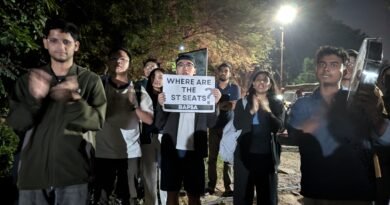
IIT Bombay Is a ‘Laboratory of Caste Hate’, Says Ambedkarite Student Group Amid Sahil Wakode Probe
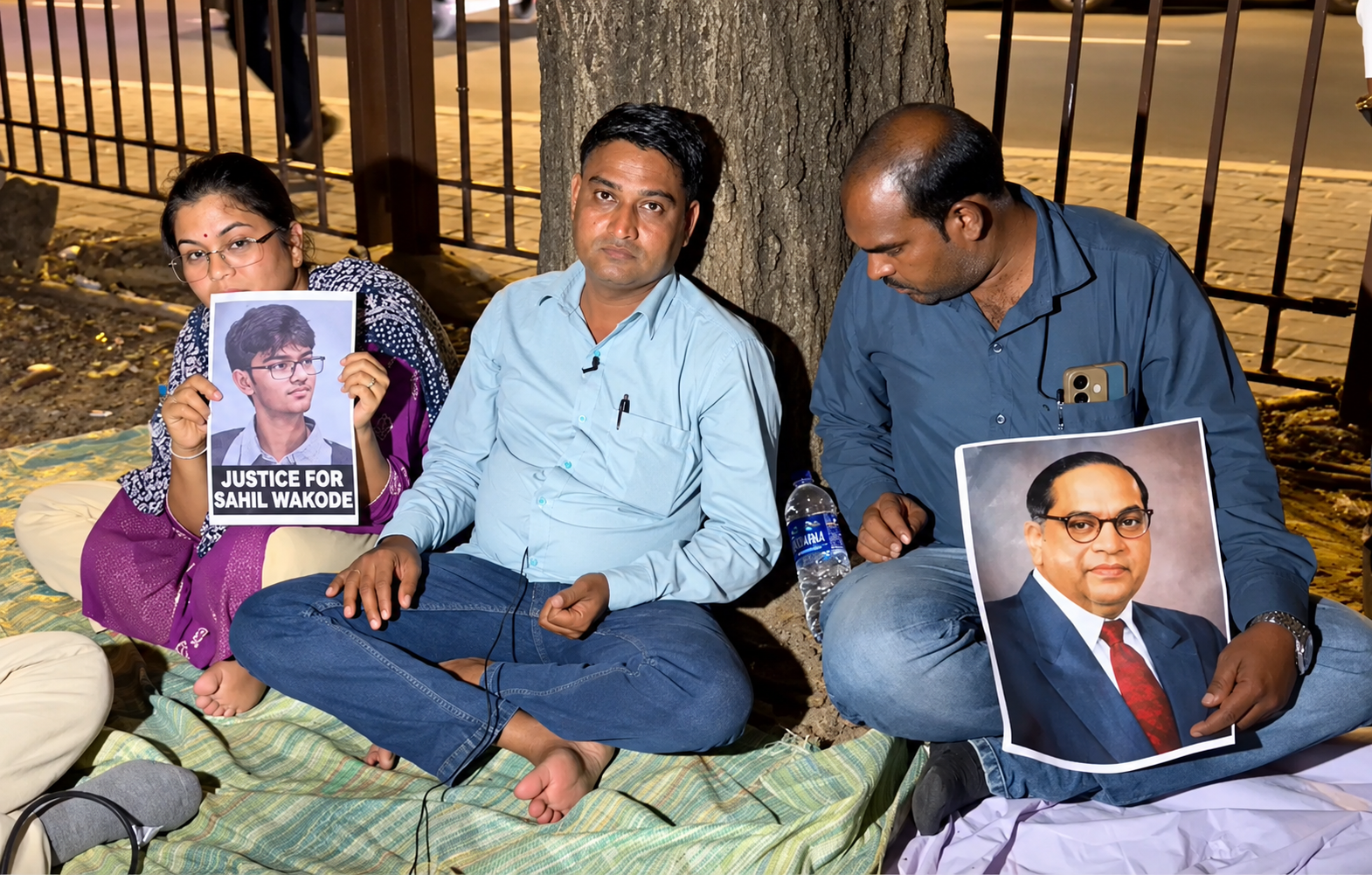
Ambedkar Periyar Phule Study Circle (APPSC-IIT Bombay) has accused the institute of institutional bias in its handling of the death of 19-year-old Dalit student Sahil Wakode, questioned the newly constituted 10-member inquiry committee and demanded an independent probe with 50% SC/ST representation. The group has also invoked earlier cases of Aniket Ambhore and Darshan Solanki, arguing that concerns over caste discrimination at IIT Bombay have persisted for years.
The Ambedkar Periyar Phule Study Circle (APPSC-IIT Bombay) has described IIT Bombay as a “laboratory of caste hate” in a statement dated September 26, 2026, issued amid continuing scrutiny over the death of Dalit student Sahil Wakode.
The student group has criticised the institute’s decision to constitute a 10-member committee to investigate the circumstances surrounding Wakode’s death, arguing that an inquiry conducted within the same institutional structure cannot provide an impartial investigation.
APPSC has demanded an external and independent investigation, with the committee headed by an SC/ST member and at least one external expert. It has further demanded that 50% of the committee comprise SC/ST members, with at least five women drawn from different disciplines.
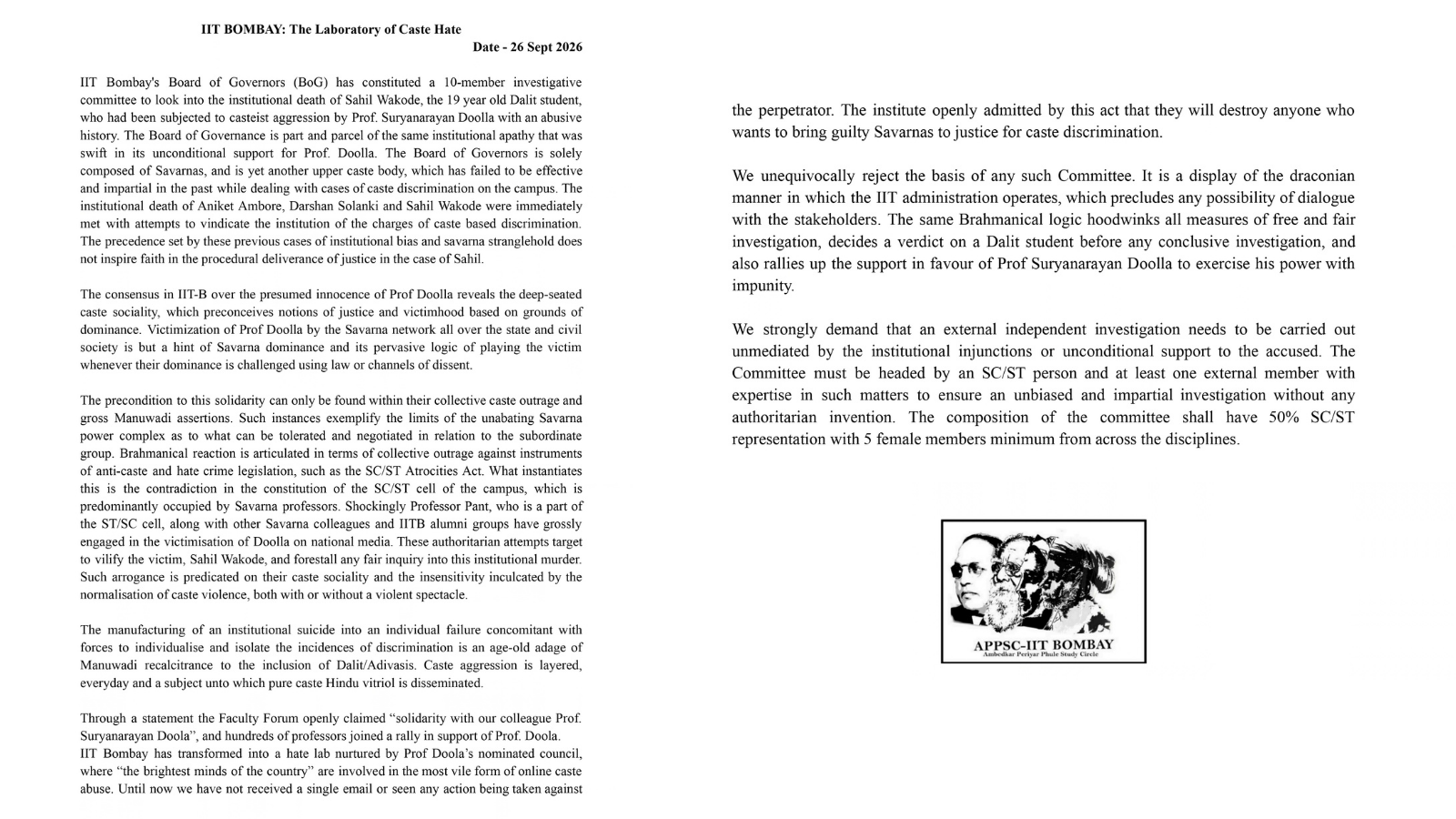
The allegations made by APPSC are contested and are not established findings of an investigation. The Mumbai Crime Branch is separately investigating the circumstances surrounding Wakode’s death, while the National Commission for Scheduled Castes has also conducted a spot inquiry.
What happened to Sahil Wakode?
Sahil Wakode, a second-year B.Tech student in IIT Bombay’s Energy Science and Engineering department, died by suicide on September 18, 2026.
According to reports, Wakode had been stopped during a mid-semester examination after allegedly being found using a mobile phone. IIT Bombay’s initial communication about the circumstances surrounding his death was subsequently withdrawn and apologised for after protests by students.
His parents have alleged that Wakode had faced caste-based harassment and discrimination and have named Professor Suryanarayana Doolla in their complaint.
Mumbai Police registered an FIR following the family’s complaint, and the investigation was transferred to the Crime Branch. The allegations remain under investigation. IIT Bombay has denied that Wakode had submitted a prior caste-discrimination complaint to its SC/ST cell or administration.
On September 21, IIT Bombay removed Doolla from his position as Dean of Administrative Affairs pending investigation. He continued as a professor at the institute at that stage.
The Board of Governors subsequently constituted a 10-member committee to examine the circumstances surrounding Wakode’s death. The committee is headed by Professor Ramesh Venkateswaran, Chairman of the Board of Governors of IIT Palakkad, and includes IIT Bombay faculty members and students, along with a retired IAS officer, a former institute vigilance officer and a psychiatrist. Doolla was later sent on leave to facilitate the inquiry.
The National Commission for Scheduled Castes also visited IIT Bombay on September 24 and directed that relevant evidence be preserved and examined. The Commission said the matter was already under investigation by the Mumbai Police Crime Branch.
APPSC questions the new inquiry committee
In its September 26 statement, APPSC argues that the IIT Bombay Board of Governors cannot be treated as sufficiently independent because, in the group’s view, the institution has previously failed to adequately address allegations of caste discrimination.
The group specifically invokes the earlier deaths of Aniket Ambhore and Darshan Solanki. APPSC’s statement alleges that the institutional response in those cases should be considered when evaluating the credibility of the current inquiry.
The group therefore rejects what it calls an institutionally controlled investigation and demands an external inquiry.
Its proposed structure includes an SC/ST person as chairperson; at least one external member with relevant expertise; 50% SC/ST representation on the committee; and a minimum of five women members from different disciplines.
These are demands made by APPSC and are not requirements imposed by the current IIT Bombay inquiry order.
The Aniket Ambhore case: 2014
The concerns raised by APPSC go back more than a decade.
In September 2014, IIT Bombay student Aniket Ambhore, an SC student pursuing electrical engineering, died after falling from the sixth floor of Hostel 13. His family alleged caste discrimination. IIT Bombay subsequently constituted a three-member committee.
The committee’s report, submitted in 2015 but reported publicly only years later, did not conclude that caste harassment caused Ambhore’s death. It attributed his difficulties to what it described as “internal contradictions.”
However, the report also made a significant general observation: it said that students entering IITs through the SC/ST quota could face difficulties in hostels and departments because of hardened attitudes toward reservation.
The report itself therefore contained an acknowledgement of the possibility of caste-related difficulties faced by reserved-category students, even while not establishing that caste discrimination caused Ambhore’s death.
Ambhore’s family disputed the adequacy of the inquiry. His mother said the committee had not reached a definite conclusion and that her son had become more anxious and unhappy after joining IIT Bombay.
Darshan Solanki: 2023
The issue resurfaced dramatically in February 2023, when first-year B.Tech Chemical Engineering student Darshan Solanki, an SC student from Ahmedabad, died by suicide after falling from his hostel building.
His family alleged that he had faced caste discrimination at IIT Bombay. IIT Bombay constituted an internal committee. Its interim report pointed to academic difficulties and stated that it had found no specific evidence of direct caste discrimination against Solanki.
Student collectives, however, disputed that assessment and submitted accounts of caste discrimination experienced by SC/ST students to the committee. The subsequent Mumbai Police chargesheet presented additional information.
Statements from Solanki’s family recorded by the police said that he had spoken about caste discrimination on campus and that the behaviour of some students changed after they learned his caste. Family members also told investigators that he had been taunted about supposedly receiving “free education” because of his reserved category. The chargesheet contained statements from 55 witnesses.
The police investigation, however, focused on a separate conflict involving his batchmate Arman Khatri, who was charged with abetment to suicide, criminal intimidation and provisions of the SC/ST (Prevention of Atrocities) Act. The chargesheet also referred to Solanki’s academic difficulties.
The NCSC eventually closed its inquiry into the case after the police chargesheet was filed, citing the matter being sub judice. The competing accounts surrounding Solanki’s death remain important to understanding why APPSC is invoking the earlier case while questioning the independence of the current inquiry.
A recurring question: institutional response to caste allegations
The three cases—Aniket Ambhore in 2014, Darshan Solanki in 2023 and Sahil Wakode in 2026—are separated by years and have different factual circumstances.
They should therefore not be treated as identical cases. But they share one institutional question: how does IIT Bombay investigate allegations of caste discrimination when the allegations concern the institution itself?
That question has acquired renewed importance because the current Wakode investigation is taking place amid competing narratives.
Wakode’s family has alleged caste-based harassment. The institute has said that he had not approached its SC/ST cell or administration with such a complaint. Some IIT Bombay students have also disputed the caste-discrimination explanation and attributed the crisis to academic pressure.
At the same time, other students have demanded institutional accountability, while families of previous IIT Bombay students who died by suicide have joined the protests.
IIT Bombay’s own anti-discrimination framework
IIT Bombay officially maintains an SC/ST Students Cell to address academic and non-academic complaints relating to caste discrimination and says the institute is committed to implementing reservation and maintaining a campus free of caste discrimination.
Its student code of conduct also explicitly prohibits casteist, abusive or discriminatory communication and states that the institute seeks to provide equal opportunities to admitted students.
Interestingly, a 2024 email circulated by Professor Doolla, when he was Dean of Student Affairs, also warned students against asking classmates about their admission categories, JEE ranks or GATE scores because such questions could reveal caste or reserved-category status.
That email does not establish whether Wakode experienced caste discrimination. But it demonstrates that IIT Bombay itself has previously recognised caste-related sensitivity as an issue requiring institutional safeguards.
Why APPSC is demanding an independent investigation
APPSC’s September 26 statement argues that an investigation into an alleged institutional failure should not be controlled exclusively by the same institutional structures whose actions are being questioned. The organisation says the Board of Governors’ decision to constitute the committee does not adequately address this concern.
Its proposed alternative is therefore not merely a different set of investigators but a different composition and institutional location of the investigation—including external participation and substantial SC/ST representation. The demand comes as the official investigation continues.
The Mumbai Crime Branch is investigating the FIR arising from Wakode’s parents’ complaint, while the IIT Bombay committee is examining the circumstances surrounding his death. The NCSC has separately intervened in the matter. At this stage, no final investigative finding has established that caste discrimination caused Wakode’s death.
What is established is that his death has triggered a major campus protest, a police investigation involving allegations of caste-based harassment, an institutional inquiry, intervention by the National Commission for Scheduled Castes and renewed scrutiny of IIT Bombay’s handling of earlier cases involving SC students.
For APPSC, the history of Ambhore and Solanki is evidence of a recurring institutional problem. For the institute and others who dispute the caste-discrimination allegations, the current investigation must determine what actually happened to Wakode.
The central question now is whether the ongoing investigations will address that dispute independently and transparently—and whether the findings will also examine the institutional environment in which the allegations arose.