‘Modern Agrahara’: BAPSA Protests ST Quota Deficit in JNU PhD Admissions, Alleges EWS Prioritised Over Tribal Representation
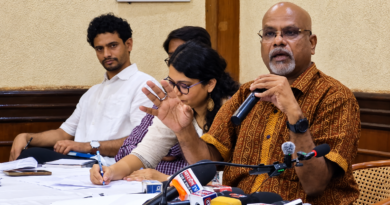
BAPSA activist and JNU PhD scholar Biswajit Minji tells BLM that the absence of Scheduled Tribe seats across several programmes raises questions about how reservation is implemented at the programme level.
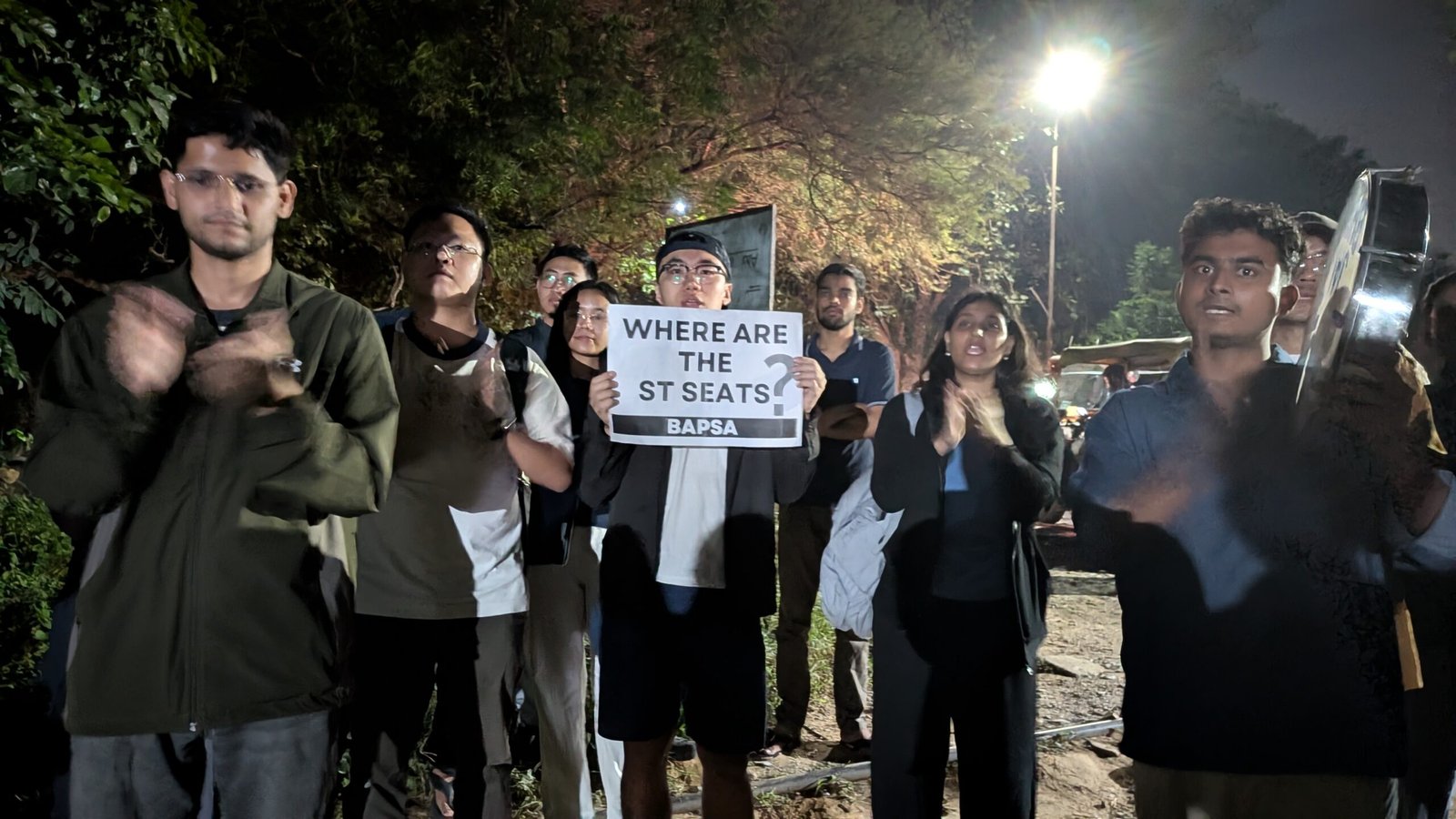
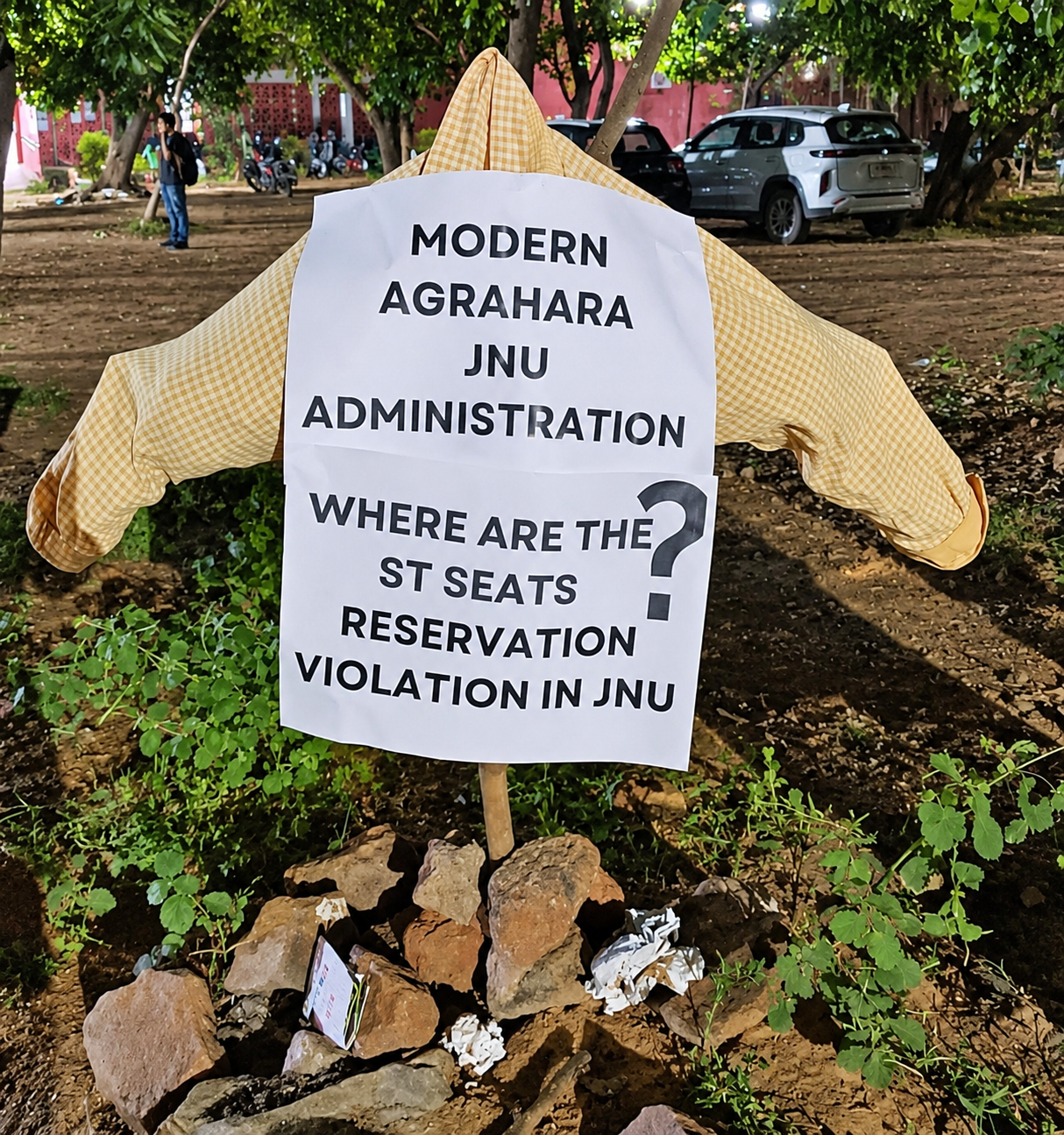
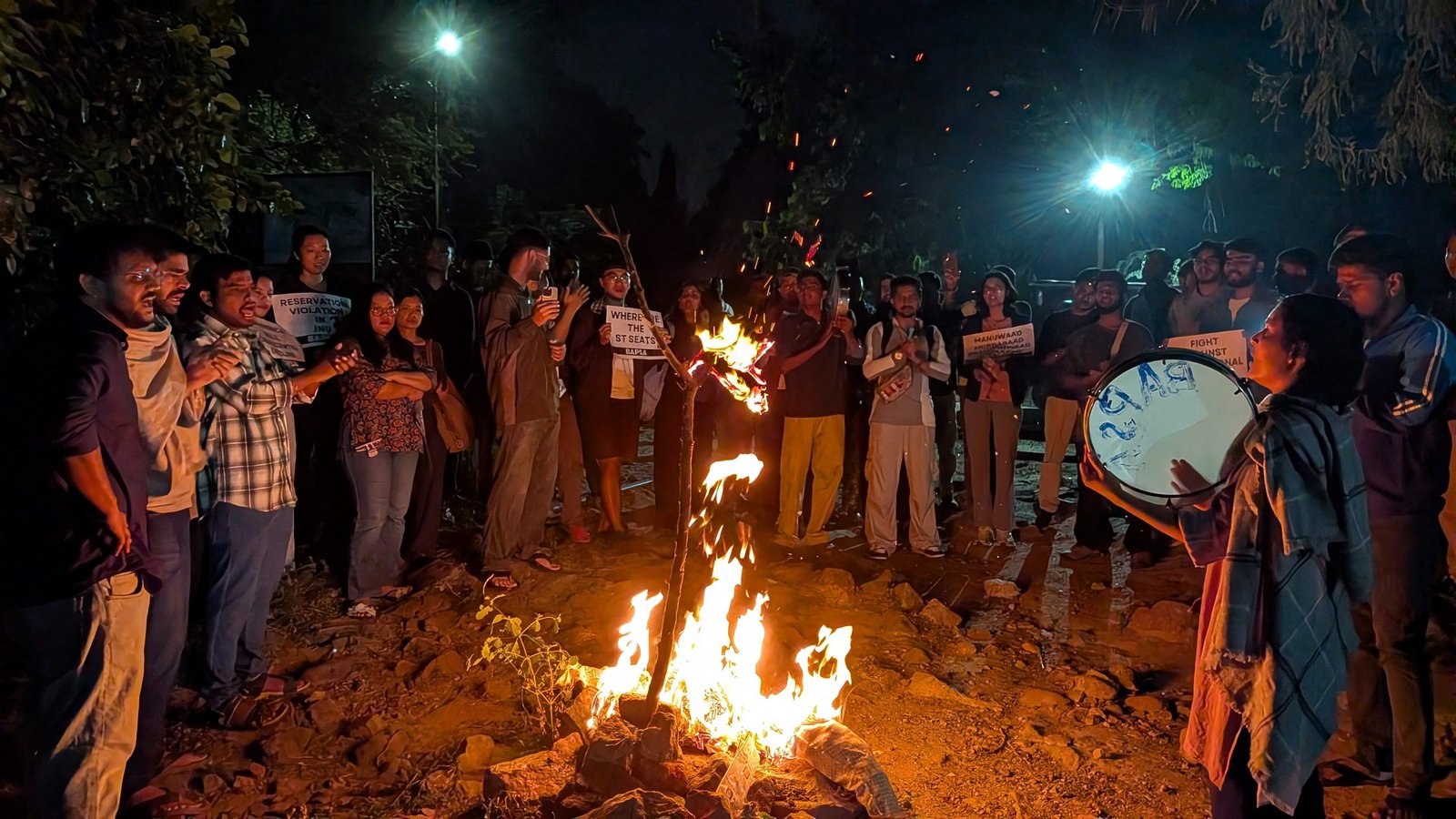
The Birsa Ambedkar Phule Students’ Association (BAPSA) staged an effigy-burning demonstration at Jawaharlal Nehru University (JNU) on October 19, 2026, protesting an institutional shortfall in Scheduled Tribe (ST) seats in doctoral admissions for the 2026–27 academic cycle.
An analysis of official admission data released by the student group showed that while the JNU PhD e-Prospectus mandates a 7.5 percent reservation benchmark for ST candidates, the university notified only 38 ST seats out of an aggregate 711, reducing actual tribal representation to 5.3 percent—a deficit of 15 seats. Demonstrators placed posters on an effigy in JNU complex, terming the university a “Modern Agrahara” and demanding immediate administrative accountability and the re-notification of lost seats before the viva-voce stage.
Data Reveals Structural Shrinkage Across Rounds
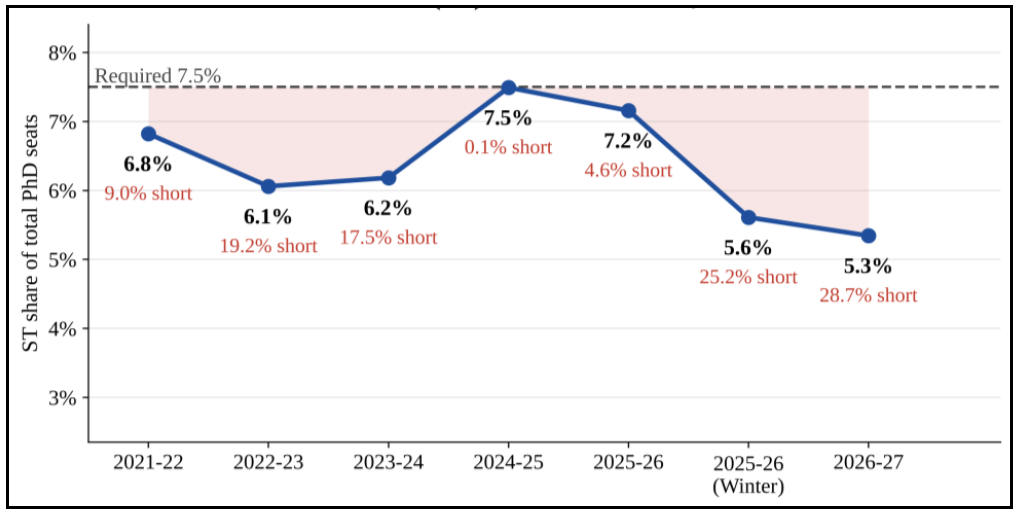
According to BAPSA’s documentary pamphlet and seat audit, the institutional shortfall in ST representation is neither an isolated occurrence nor an administrative anomaly, but part of a sustained downward trajectory. The group noted that ST seat allocations dropped from 7.5 percent in 2024–25 to 7.2 percent in 2025–26, declining further to 5.6 percent in the 2025–26 Winter phase and bottoming out at 5.3 percent in the current 2026–27 cycle.
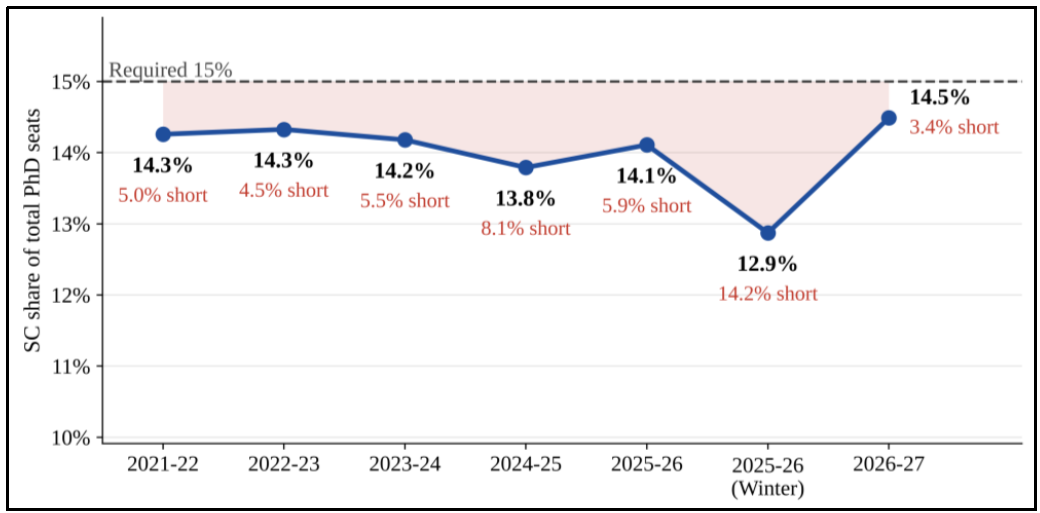
In contrast, the Scheduled Caste (SC) category has failed to touch its 15 percent statutory quota in any of the last seven admission cycles, recording deficits between 3.4 percent and 14.2 percent. Over these seven consecutive cycles, out of 5,270 notified PhD seats, 743 were allocated to SC candidates (14.08 percent) and 345 to ST candidates (6.55 percent).
The student body alleged that in the 2026–27 session alone, the Economically Weaker Sections (EWS) quota—introduced for unreserved communities—surpassed its mandated 10 percent cap by 2.7 percent, whereas ST candidates suffered an effective deprivation of 28.7 percent relative to their constitutional share. The group pointed out that 56 of the 84 PhD programmes notified this year offer no ST seats whatsoever, yet 24 of these zero-ST programmes carry reserved seats for the EWS category. Over four successive admission phases, 30 programmes offering 351 seats failed to advertise even a single ST seat.
School-Wise Disparities and Zero-ST Allocations
The school-wise seat breakdown published by BAPSA indicates that the deficit is heavily concentrated in the university’s flagship departments. The School of International Studies (SIS), comprising 14 centres and 21 programmes, notified four ST seats against an expected benchmark of eight, recording a 50 percent shortfall. The School of Language, Literature & Culture Studies (SLL&CS) notified six seats instead of nine (a 33.3 percent shortfall), while the School of Social Sciences (SSS) released nine ST seats against an expected 11, with the allocated seats restricted to seven of its 19 programmes.
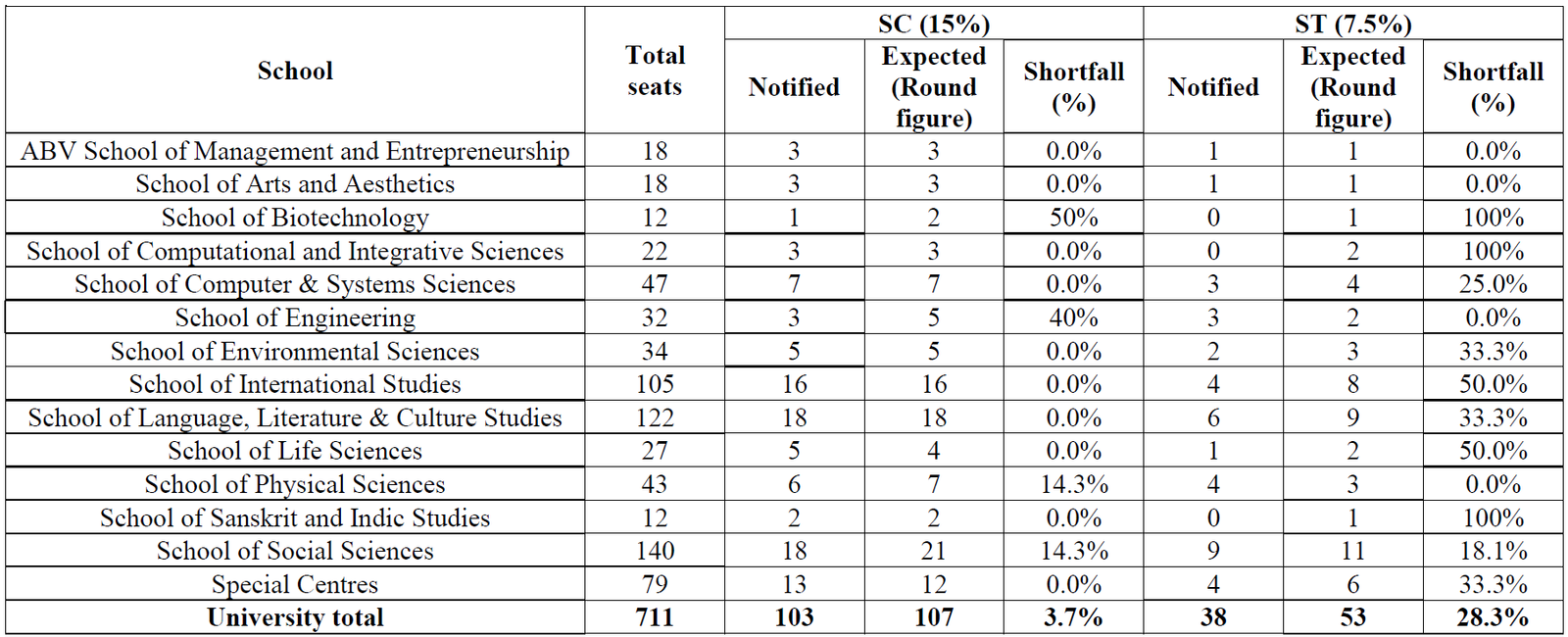
The School of Computational and Integrative Sciences (SCIS), the School of Biotechnology (SBT), and the School of Sanskrit and Indic Studies (SSIS) registered zero ST seats across their PhD intake. In total, out of 13 schools, only four met their expected ST allocation. The SC quota similarly faced seat cuts in the School of Social Sciences (short by three seats), School of Engineering (short by two seats), School of Biotechnology, and School of Physical Sciences.
School-Wise Disparities and Zero-ST Allocations
BAPSA highlighted that the root mechanism enabling the exclusion of ST candidates lies in the JNU administration’s evasion of university-level or centre-level reservation rosters, relying instead on fragmented programme-level distributions. Because an ST quota of 7.5 percent requires a minimum cohort of seven seats in a programme to mechanically yield one ST seat, breaking admissions down into small batches ensures that tribal candidates remain permanently locked out of the intake.
Speaking to Bahujan Lives Matter, BAPSA activist and JNU PhD research scholar Biswajit Minji explained how this micro-level slicing circumvents constitutional obligations:
“PhD admissions are now split into two cycles a year, but the central issue is that seats are not appearing in multiple centres. The administration is applying reservations at the programme level rather than at the university, school, or even centre level. In the Centre for the Study of Regional Development (CSRD), for example, there are three programmes: Geography, Economics, and Population Studies. If the administration notifies only two, three, or four seats per programme, ST candidates can never secure representation because a minimum of seven seats is mathematically required to trigger a single ST seat. There is no rotational roster applied across consecutive cycles. As a result, several programmes have run for four to five consecutive years without admitting a single ST scholar.”
Minji also pointed out arbitrary internal divisions that dilute statutory thresholds:
“In the 2026–27 intake, the total intake is 711. At 7.5 percent, ST scholars should have received roughly 53 seats, but only 38 were notified—a straight theft of 15 seats. Neither the JNU PhD Ordinance of 2022 nor the e-Prospectus explains how the seat roster is calculated or how these seats are distributed across categories. In the School of Sanskrit and Indic Studies, 12 seats were notified, which should have yielded at least one ST seat. Instead, the administration split the intake into six seats through UGC-NET and six through NET-JRF, ensuring neither pool crossed the seven-seat threshold, thereby wiping out the ST seat completely. While UR and EWS percentages remain protected or exceeded, the administration continues to depress SC and ST intakes.”
Systemic Gatekeeping in Viva-Voce and Faculty Backlogs
The student organisation emphasised that seat denials at the advertisement stage are linked with long-standing caste bias in doctoral viva-voce assessments. JNU’s current admission framework assigns 70 percent weightage to the written examination and 30 percent to the oral interview for NET-qualified candidates, while admissions via the NET-JRF mode rely entirely on 100 percent viva-voce assessment.
BAPSA noted that three successive statutory inquiries—the Rajiv Bhatt Committee (2012), the Thorat Committee (2013), and the Abdul Nafey Committee (2016)—found systematic downward bias against Bahujan scholars in interviews. The Rajiv Bhatt Committee established that SC/ST candidates scored 19 to 20 percent lower and OBC candidates 11 percent lower than general category candidates in the oral exam despite strong written marks. While the Abdul Nafey panel formally recommended slashing the viva-voce weightage from 30 marks to 15 marks to mitigate institutional bias, the university administration has refused to enforce the reduction.
Student leaders also linked the overall contraction of PhD intake to the systemic denial of faculty promotions for SC, ST, and OBC professors through the ‘Not Found Suitable’ (NFS) categorization, which artificially depresses the supervisory capacity governed by UGC student caps.
Demands for Corrective Corrigendum and Roster Audits
The demonstrating students demanded that the university administration immediately issue a corrigendum to the 2026–27 PhD e-Prospectus, restoring the 15 unnotified ST seats to reach the mandated 53-seat total before viva-voce examinations commence.
The charter submitted by BAPSA further seeks the public release of category-wise breakdowns for roughly 200 doctoral seats that went unfilled in the 2024–25 cycle; the abolition of 100-percent interview weightage under the NET-JRF stream; the reinstatement of the university’s independent entrance examination (JNUEE); a transparent social audit of viva-voce evaluations; and the mandatory institutional disclosure of roster registers across all departments and centres.