
‘Caste in Corporate America Is Ahead of Indian Law’: Anil Wagde on the Cisco Case, and Dalit Mobilization in the US
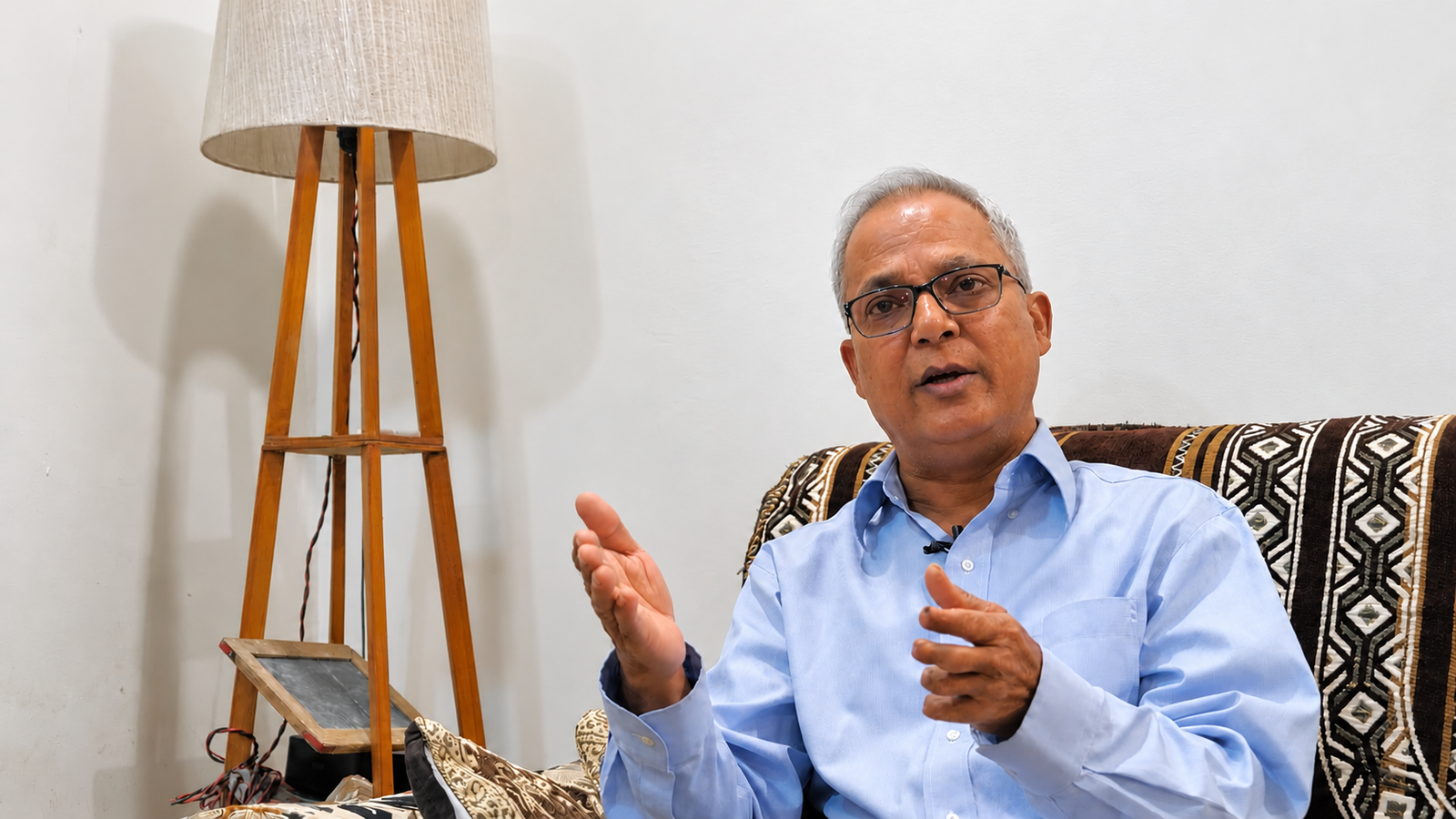
Following the historic passage and subsequent gubernatorial veto of California’s anti-caste discrimination bill (SB 403), Anil Wagde, spokesperson for the Ambedkar International Center (AIC), speaks with Manish Sagar of Bahujan Lives Matter. Wagde dissects the institutional compromises that diluted the legislation, the subtle corporate discrimination facing Dalit tech workers in Silicon Valley, and why the global fight against caste cannot rely on political benevolence but demands autonomous, grassroots mobilization.
Watch the complete interview below:
Full English Translation of the Interview
Manish Sagar: Welcome everyone. In this conversation on Bahujan Lives Matter, we are joined by Anil Wagde sir, spokesperson for the Ambedkar International Center (AIC) in the United States.
Sir, to start, could you provide some background on the Ambedkar International Center and your work in the US?
Anil Wagde: Thank you, Manish, for this opportunity. I am a spokesperson for the Ambedkar International Center (AIC), a human rights organization based in the United States established in 2014. We have a 14-acre center in Maryland, and our landmark Dr. B.R. Ambedkar statue unveiling—the ‘Statue of Equality’—is taking place on October 14.
AIC functions as a platform to lobby and advocate for the human rights of marginalized communities, particularly Dalits. We are a collective of Ambedkarites from across India—Uttar Pradesh, Andhra Pradesh, Tamil Nadu, Maharashtra, and beyond—who moved to the US, some as permanent residents and others on working visas.
AIC has supported various social struggles in India, provided relief during the COVID-19 pandemic, filed an Amicus Curiae brief in the landmark Cisco caste discrimination case, and has been actively campaigning to have caste legally recognized as a protected category in the US.
Manish Sagar: Sir, could you share more details about the veto of California’s anti-caste discrimination bill, SB 403, by Governor Gavin Newsom?
Anil Wagde: We are deeply disappointed by Governor Newsom’s decision to veto the bill. SB 403 had been passed with an overwhelming two-thirds majority in both houses of the California Legislature—the State Senate and the State Assembly. Given the Democratic Party’s supermajority in California, we expected the governor to sign it into law.
This campaign moved very rapidly following our historic municipal victory in Seattle, where caste was outlawed by the city council. In California, AIC partnered with Equality Labs and over 20 civil rights organizations under the Americans Against Caste Discrimination coalition—including Hindus for Human Rights, the Indian American Muslim Council, the Ambedkar King Study Circle, the Boston Study Group, and Sikh bodies.
Crucially, the local Ravidassia community carried a major share of this eight-to-nine-month campaign, turning out in large numbers and traveling consistently to the state capitol in Sacramento.
When the bill was originally introduced, caste was framed as a standalone, independent protected category. However, right-wing Hindu organizations strongly opposed it, claiming that caste does not exist or that acknowledging caste is ‘anti-Hindu’. During assembly negotiations, a compromise was struck where caste was subordinated under the broader category of “ancestry”.
Once that compromise occurred, it gave Governor Newsom a rationale to say that caste is “already covered under ancestry, so an explicit bill is unnecessary” .
That reasoning is flawed. In the Cisco case, Cisco’s core legal defense was precisely that caste is not a protected category under American civil rights law. If truth needs to be stated a hundred times, it should be stated. Without explicitly naming caste in the statute, courts and corporate HR bodies will continue to waffle.
Manish Sagar: How will these anti-caste policies and legal battles in the United States impact Dalits currently living and working in India?
Anil Wagde: All the advocacy we do in the US is primarily meant to empower and protect our brothers and sisters back home in India . Because US developments receive significant media coverage in Indian newspapers and prime-time discussions, the awareness multiplier is massive.
On a substantive legal level, India has strict criminal laws like the SC/ST (Prevention of Atrocities) Act, but those statutes are structured around violent offenses, physical altercations, and blatant caste slurs in rural contexts. The subtle, institutional discrimination that permeates modern corporate offices has no real remedy under Indian jurisprudence. A case like Cisco has never even been successfully admitted in an Indian court because our judges look for physical harm or overt abuse to apply the Atrocities Act. Not a single Indian domestic corporation mentions caste in its equal opportunity or anti-discrimination guidelines.
In contrast, American universities and multinational corporations have begun amending their internal anti-discrimination policies to explicitly ban caste. Tech giants like Apple, Meta, IBM, and Cisco now have caste on their policy books.
What does that mean in practice? Hiring managers are instructed not to ask invasive, leading questions designed to uncover an applicant’s social background.
In Indian corporate setups, Dalit employees face subtle microaggressions—colleagues asking why they do not attend certain temples, scrutinizing their dietary choices, or even tapping their left shoulder to check for the janeu (sacred thread). An explicit corporate policy makes such conduct punishable by termination.
Because these US tech giants run major operations in India, their global HR mandates apply to their Indian campuses as well Over time, this creates corporate precedent and sets the groundwork for demanding equal opportunity employment and fair hiring across private industries in India.
Manish Sagar: Following the California veto, what is the road ahead for the movement?
Anil Wagde: There is significant introspection underway across our organizations. In hindsight, attempting to pass a statewide bill in a massive state like California immediately after Seattle was rushed. We should have consolidated our victory in Seattle, built corporate training modules for Seattle-based companies like Amazon, and demonstrated practical compliance models first.
Going forward, our strategy is to focus on smaller municipalities, city councils, and universities. Academic institutions are far more receptive to human rights and civil rights arguments
We also have to confront the disparity in resources. Indian-Americans represent about 1% to 2% of the US population, and Dalit-Bahujans are a tiny minority within that diaspora. Our opponents have immense financial power and political access, promising millions to political campaigns. We cannot outspend them.
Our strength has to come from numbers and grassroots coalitions.
Many Dalit tech workers in the US are on H-1B visas and fear that participating in public protests could jeopardize their employment and immigration status. We have to build safe, protected organizing spaces so more tech workers and women join public actions .
We need our allied groups—Hindus for Human Rights, Indian American Muslim Council, Sikh bodies, and African American civil rights organizations—to carry more of the visible organizing weight rather than treating caste purely as a sectional Dalit matter.
Kshama Sawant succeeded in Seattle because she built genuine multi-racial, working-class grassroots coalitions around rent control, minimum wage, and civil rights. We cannot rely on closed-door conversations with politicians; politicians will drop us when donors pressure them. We need an independent, vocal mass campaign that makes doing the right thing politically unavoidable.
Manish Sagar: Right after the veto, there were headlines and social media videos showing certain right-wing Indian groups celebrating the defeat of SB 403, with some claiming to represent Ambedkarite figures. Who are these groups?
Anil Wagde: These groups operate as proxies for right-wing political interests . At their rallies, people were seen carrying portraits of Mahatma Jyotirao Phule . But when reporters spoke to the attendees carrying those portraits and asked who the person in the frame was, they had no idea—some even replied, “Oh, who is this Sikh gentleman?”
It illustrates the profound political ignorance and co-optation that exists. As Dr. Ambedkar once said: You have to explain to the bonded laborer that they are in chains, and only then will they rise to break those chains .
These co-opted elements are a tiny, vocal minority . Our task is to continue educating our people, reading Phule and Ambedkar, and organizing relentlessly .
