When an Anonymous X Post Reaches the PMO: Why Ambedkarite Thought Is Under Scrutiny
An anonymous X account calls Ambedkar, Phule and anti-caste scholarship “poison”. Within a day, the Education Ministry asks central universities to respond. B.R. Mani, author of Debrahmanising History, says the controversy is ultimately about the place of Ambedkarite and Phuleite thought in Indian education.
An anonymous X account’s attack on Ambedkarite and anti-caste writings has now reached the Union government’s education machinery, raising concerns among academics and Dalit-Bahujan voices over the scrutiny of anti-caste scholarship in Indian universities.
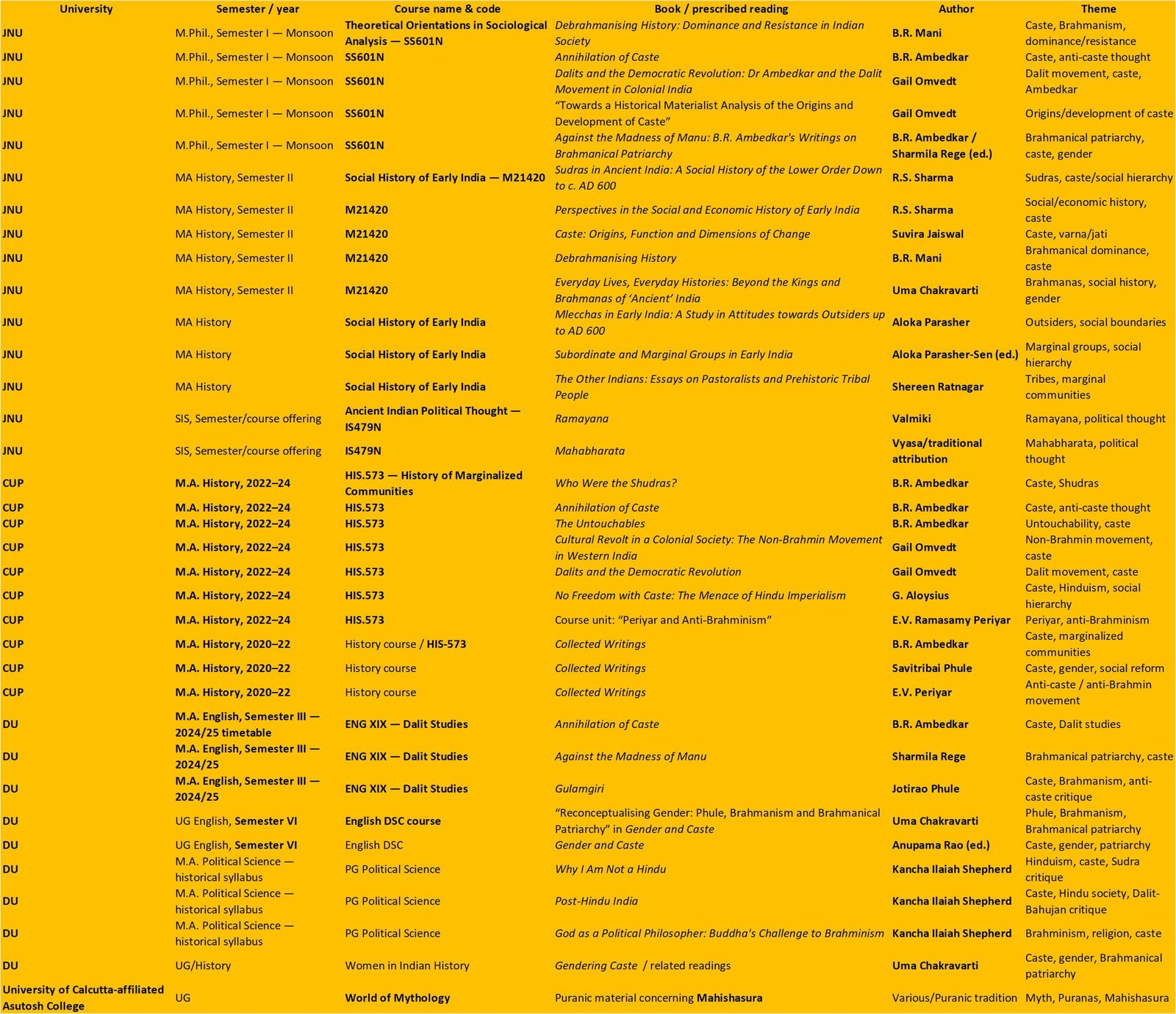
On September 26, the X account @IamTheStory__ posted a list of university courses and readings, describing material dealing with patriarchy, caste annihilation and “Debrahmanising” history as “poison” being fed to young minds. The post specifically targeted works by B.R. Ambedkar, Jyotirao Phule, Gail Omvedt, Sharmila Rege, Kancha Ilaiah Shepherd, Periyar and other scholars.
The following day, September 27, an Assistant Section Officer in the Union Ministry of Education sent an email to central universities with the subject “Seeking comments on PMO Reference-reg.”
The email said the Ministry had received communication from the Prime Minister’s Office regarding the X post and asked central universities to “furnish comments” on it. Universities were also asked to provide enrolment details for the courses mentioned in the post. The communication was marked “URGENT.”
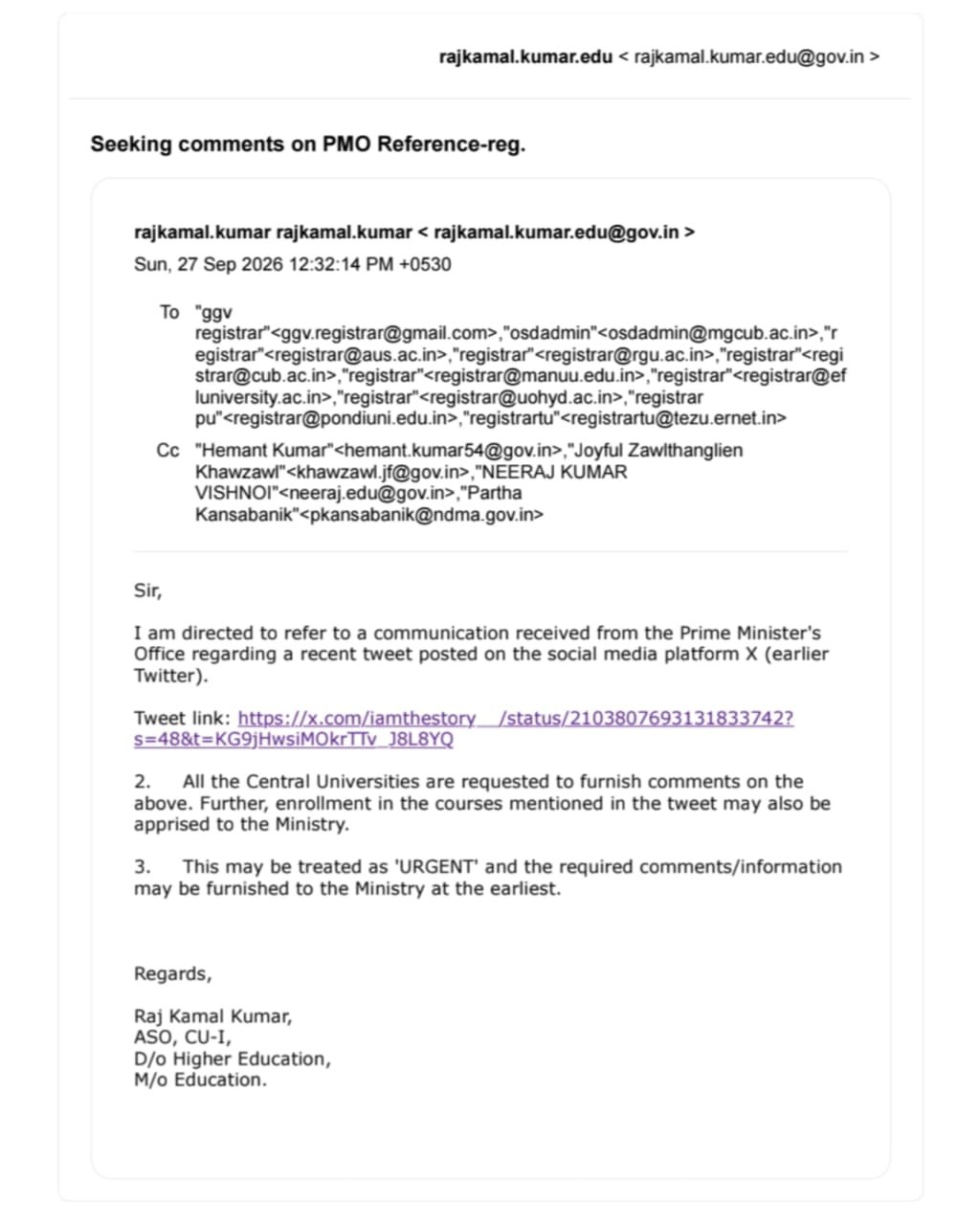
The sequence has left an important question unanswered: What exactly did the PMO communicate to the Education Ministry, and why did an anonymous social-media post become the subject of an urgent communication to universities?
The publicly available communication establishes that the Ministry acted with reference to a communication received from the PMO. It does not, however, establish what the original PMO communication said, who initiated it within the PMO, or whether the PMO itself sought any change to university curricula. That missing part of the paper trail matters.
What exactly is being questioned?
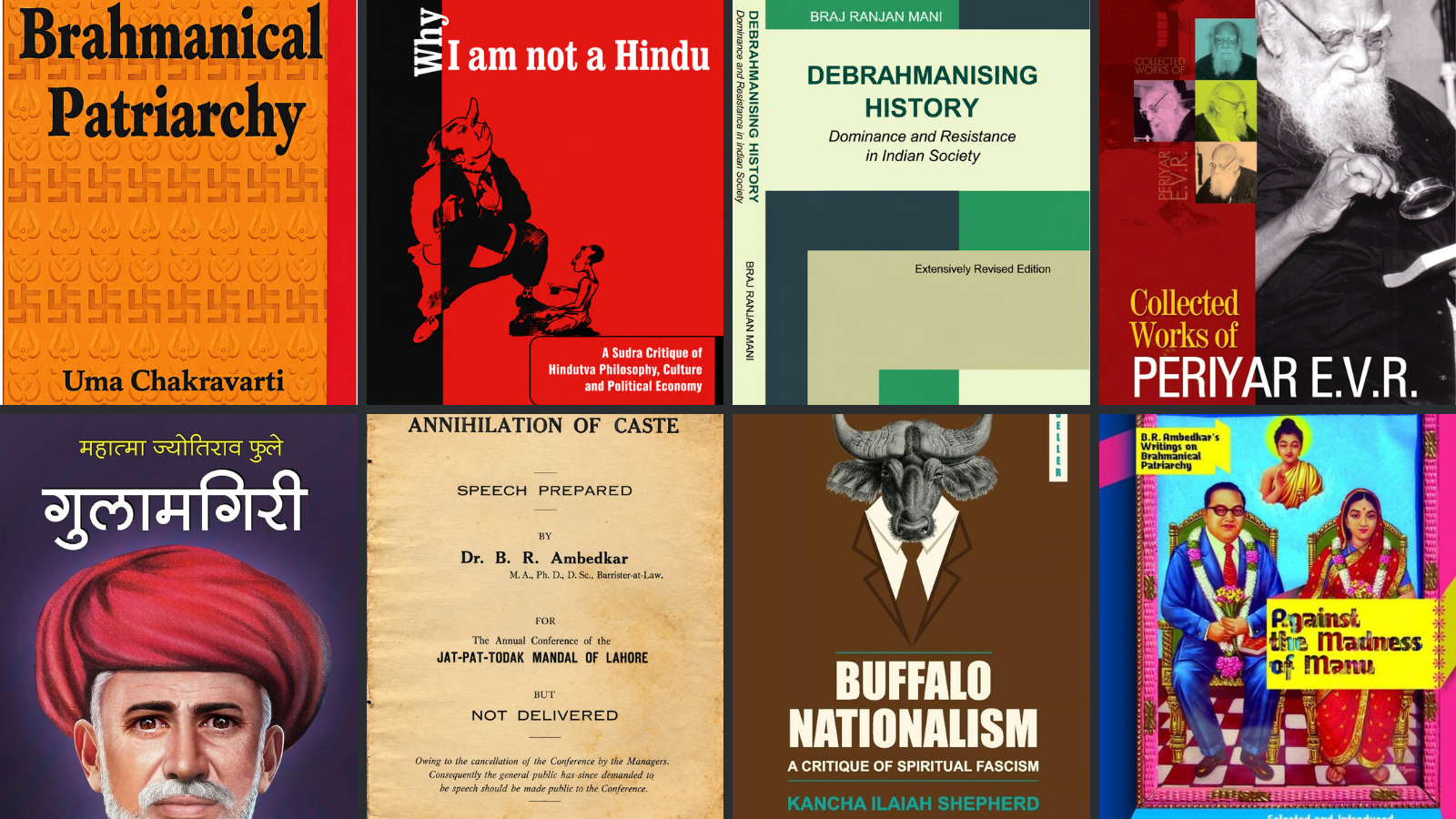
The texts being questioned are not simply a collection of contemporary political writings.
Ambedkar’s Annihilation of Caste, Phule’s Gulamgiri, Sharmila Rege’s Against the Madness of Manu, Gail Omvedt’s scholarship and writings associated with Periyar form part of a wider intellectual tradition examining caste, Brahmanical social structures, patriarchy and social exclusion.
Several of these works have appeared in university curricula and academic reading lists. Braj Ranjan Mani’s Debrahmanising History, for example, is itself an established scholarly work on Dalit-Bahujan intellectual traditions and resistance to caste and Brahmanism. Mani is the author of the book whose title also appears among the readings questioned in the controversy.
There is therefore no question that anti-caste thought exists within India’s universities.
The question is why the presence of such scholarship has now become a matter for an urgent government query after being described as “poison” by an anonymous social-media account.
B.R. Mani: “This is Ambedkarite, Phuleite literature”
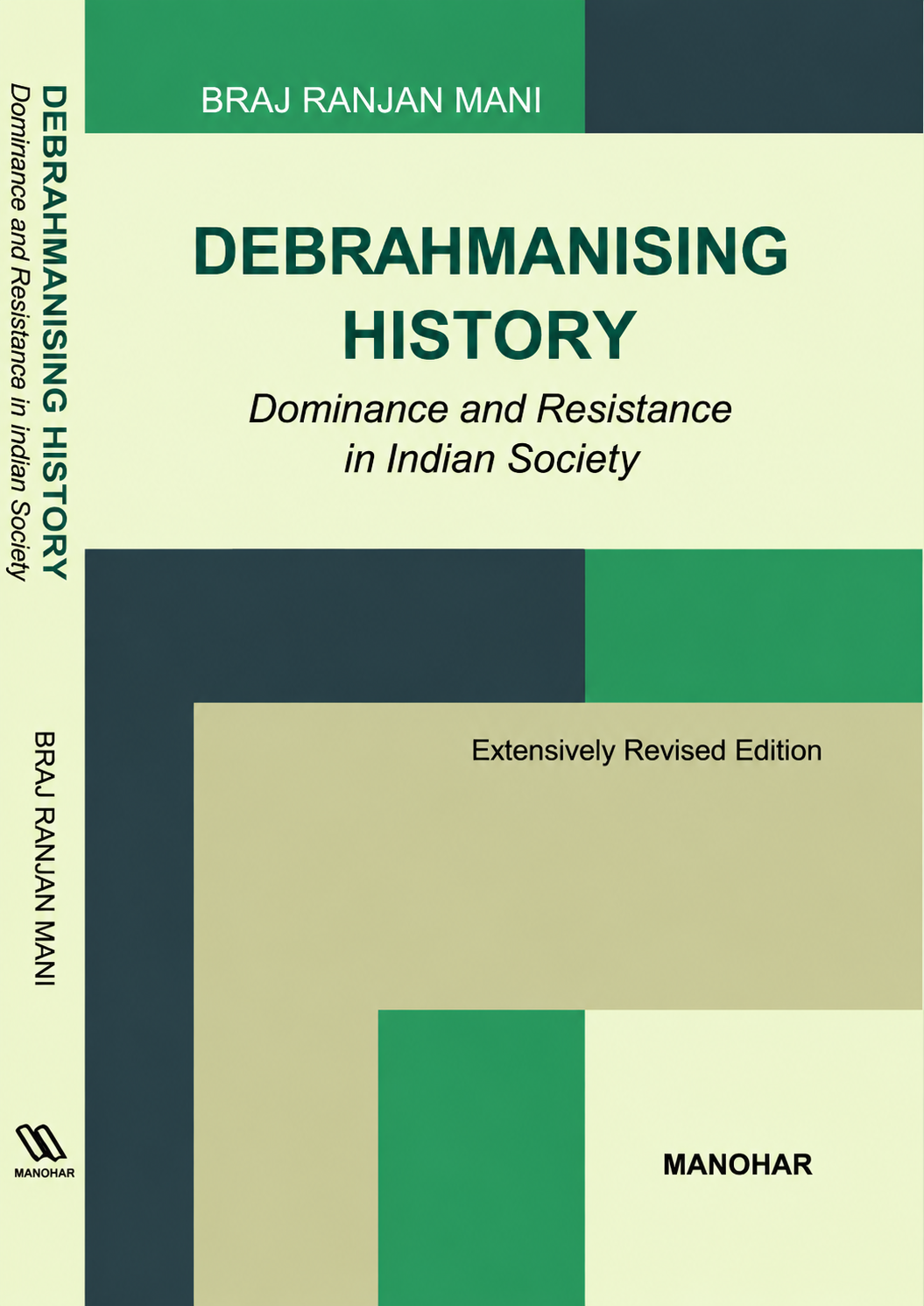
Speaking to Bahujan Lives Matter about the development, writer and scholar Braj Ranjan Mani, author of Debrahmanising History: Dominance and Resistance in Indian Society, argued that the controversy should not be understood simply through the language of “Marxist” or “left” literature.
“Look, this is an out-and-out right-wing fascist government, and it wants people not to be educated critically—especially when it comes to Phuleism and Ambedkarism. It talks about Marxism and other things, but it is the books of Babasaheb Ambedkar and Jyotirao Phule that are being targeted. There is no original thinking left among the Marxist thinkers here. The original radical thinking of this country is Phuleism and Ambedkarism. And because they cannot directly say that they want to target this, they use words like Marxism and Naxalism.”
According to Mani, the literature identified in the social-media post is primarily part of the Ambedkarite, Phuleite and Periyarist intellectual traditions.
“This is Ambedkarite literature, Phuleite literature, Periyarist literature—and this is the radical and transformative literature of this country.”
Mani argued that these traditions provide an intellectual framework for questioning caste and transforming social relations.
“If any socio-cultural change happens, its ideological vehicle is Ambedkarism, Phuleism.”
He also argued that describing such literature through categories such as Marxism or Naxalism can obscure what he sees as its specifically anti-caste character. His intervention is significant because Debrahmanising History itself examines Dalit-Bahujan intellectual traditions and identifies Phule, Periyar and Ambedkar among major figures in an egalitarian counter-tradition.
“The PMO has no authority to intervene in academic autonomy”
The strongest objection raised by Mani concerns not merely the contents of the 35 readings, but the institutional route through which the complaint reached universities.
Mani said:
“The Prime Minister’s Office has no authority at all to intervene in academic autonomy, especially in areas where higher research and advanced learning are taking place.”
The exact legal and institutional boundaries of executive involvement would require examination of each university’s governing framework. But the concern over academic autonomy has also been raised by academics responding to the Ministry’s communication.
University of Hyderabad professor Bhangya Bhukya, for example, said that university statutory bodies decide what is taught, rather than the PMO. The Wire and The News Minute have reported similar concerns from academics over the government’s intervention following the anonymous post. The distinction is important.
The Ministry’s letter currently available publicly does not order universities to remove the books. It asks for comments and enrolment information. But it does establish a direct institutional chain: Anonymous X post → PMO communication → Ministry of Education → Central Universities
The question is whether this should become a normal mechanism through which social-media objections can trigger government scrutiny of university curricula.
Why Ambedkar and Phule?
For generations, Dalit and Bahujan intellectual movements have argued that India’s formal knowledge systems historically marginalised the experiences and intellectual traditions of communities subjected to caste discrimination.
Ambedkar’s Annihilation of Caste challenged caste hierarchy at its ideological foundations. Phule’s Gulamgiri attacked social domination and developed a counter-history of caste oppression. Periyar challenged caste hierarchy and religiously sanctioned inequality. Later scholars expanded these traditions into the study of caste, gender, labour, religion, history and social exclusion. For students from oppressed communities, these writings therefore represent more than an ideological position.
They provide intellectual tools to ask: Why did caste survive?, Who benefited from caste hierarchy?, How was caste justified?, How did oppressed communities resist it?, And what would it take to dismantle it?
That is precisely why the present episode has generated concern among Dalit-Bahujan academics and activists. The issue is not whether a university syllabus should ever be reviewed. Academic curricula should remain open to scholarly debate and periodic revision. The concern is who initiates that scrutiny, on what basis and through what institutional process.
Mani: “They put garlands on Ambedkar and Phule, but become uncomfortable with Ambedkarism”
Mani also described what he sees as a contradiction between public reverence for Ambedkar and resistance to the political and intellectual implications of Ambedkarite thought.
“They put garlands on Ambedkar and Phule, and now they become uncomfortable with Ambedkarism.”
He described this as a recurring contradiction in Indian public life: the symbolic celebration of anti-caste icons alongside resistance to the more radical implications of their writings. This distinction is particularly relevant to the current controversy.
Ambedkar’s image is widely used in public institutions, political campaigns and government events. But Ambedkar’s writings do not merely celebrate equality as an abstract value. They interrogate caste as a system of social power.
The question raised by the present controversy is therefore not simply whether Ambedkar is “respected”. It is whether students are allowed to study what Ambedkar actually wrote about caste.
The asymmetry in knowledge deserves scrutiny
The controversy also comes amid a broader debate over the kinds of knowledge receiving institutional attention and resources.
Government-funded research under the SUTRA-PIC programme has supported research into indigenous cows, cow urine, cow dung and Panchagavya. ThePrint reported in June 2026 that approximately ₹98 crore had been allocated under the programme and that researchers at IITs had undertaken projects involving cow urine and cow dung.
This does not mean that every scientific study of cow-derived materials is inherently unscientific. Such materials can legitimately be studied for chemical, agricultural, environmental or industrial properties. Claims about medicinal benefits, however, require scientific evidence.
For example, after IIT Madras director V. Kamakoti publicly made claims about medicinal properties of cow urine, medical experts cited by The Week said there was no concrete scientific evidence supporting those specific therapeutic claims.
The broader point is not that research on cows should not exist. It is that universities should evaluate competing claims through evidence and scholarly standards rather than ideological preference.
This raises a legitimate public-interest question: Why should anti-caste scholarship become the subject of urgent governmental scrutiny while other contested knowledge claims can receive institutional research attention?
The answer cannot simply be that one subject is “Indian” and another is “ideological”. Universities are precisely where competing claims should be examined, debated and tested.
Mani’s larger argument: education and critical thinking
Mani placed the controversy within a much wider argument about the direction of Indian education. He argued that the reduction of education to what he described as traditional or religious narratives comes at the expense of critical and radical pedagogy.
He used the term “obscurantism” to describe what he sees as the presentation of traditional beliefs or myths as unquestioned knowledge.
“The main issue is this: annihilating caste is the problem; Brahmanising history is the problem.”
He argued that the central ideological disagreement is ultimately over whether education should critically interrogate caste and Brahmanism or reproduce inherited social narratives. These are Mani’s interpretations of the government’s broader educational direction; they are not established by the Ministry’s September 27 letter itself.
That distinction matters. The letter establishes a specific administrative action concerning an anonymous X post. The broader ideological interpretation comes from critics such as Mani and other anti-caste voices.
Dalit voices and the politics of being heard
The reaction from Dalit-Bahujan academics and public figures has highlighted another dimension. The X account that triggered the controversy is anonymous. Yet its post was followed within a day by an official Ministry communication citing a PMO reference.
The issue is not to establish that every Dalit complaint is ignored or that every anonymous complaint is acted upon. It is to ask whether the threshold for institutional attention appears different depending on whose grievance is being articulated and what kind of knowledge is being challenged.
Dr Laxman Yadav questioned the episode in a social-media post, asking why the government was concerned about books by Ambedkar and Phule and why a government would seek university responses after an anonymous account objected to them.
Congress leader and Leader of Opposition Rahul Gandhi also criticised the government’s response, arguing that the PMO appeared to respond rapidly to an internet account while other concerns involving students received less attention. Those are political claims and should be understood as such.
This is bigger than one X account
The most consequential part of this episode is not the anonymous account itself. Criticism of Ambedkar, Phule, Periyar and anti-caste scholarship is not new. What requires scrutiny is the institutional pathway from a social-media complaint to a government request directed at universities. India’s universities should be places where students can encounter Ambedkar alongside Gandhi, Phule alongside other traditions, Periyar alongside religious philosophy, and competing interpretations of Indian history.
They should be able to read, debate, question and reach their own conclusions. For a society still living with the consequences of caste, making scholarship that interrogates caste harder to teach would not make caste disappear.
It would only make the history of caste harder to study. And when the writings of those who challenged caste hierarchy become the subject of urgent governmental scrutiny after an anonymous complaint, the country is entitled to ask:
Who is afraid of students reading Ambedkar?