IIT Bombay Suicide: Police Crack Down on IIT Bombay Students, Kin of Sahil Wakode on One-Month Death Anniversary; 22 Detained
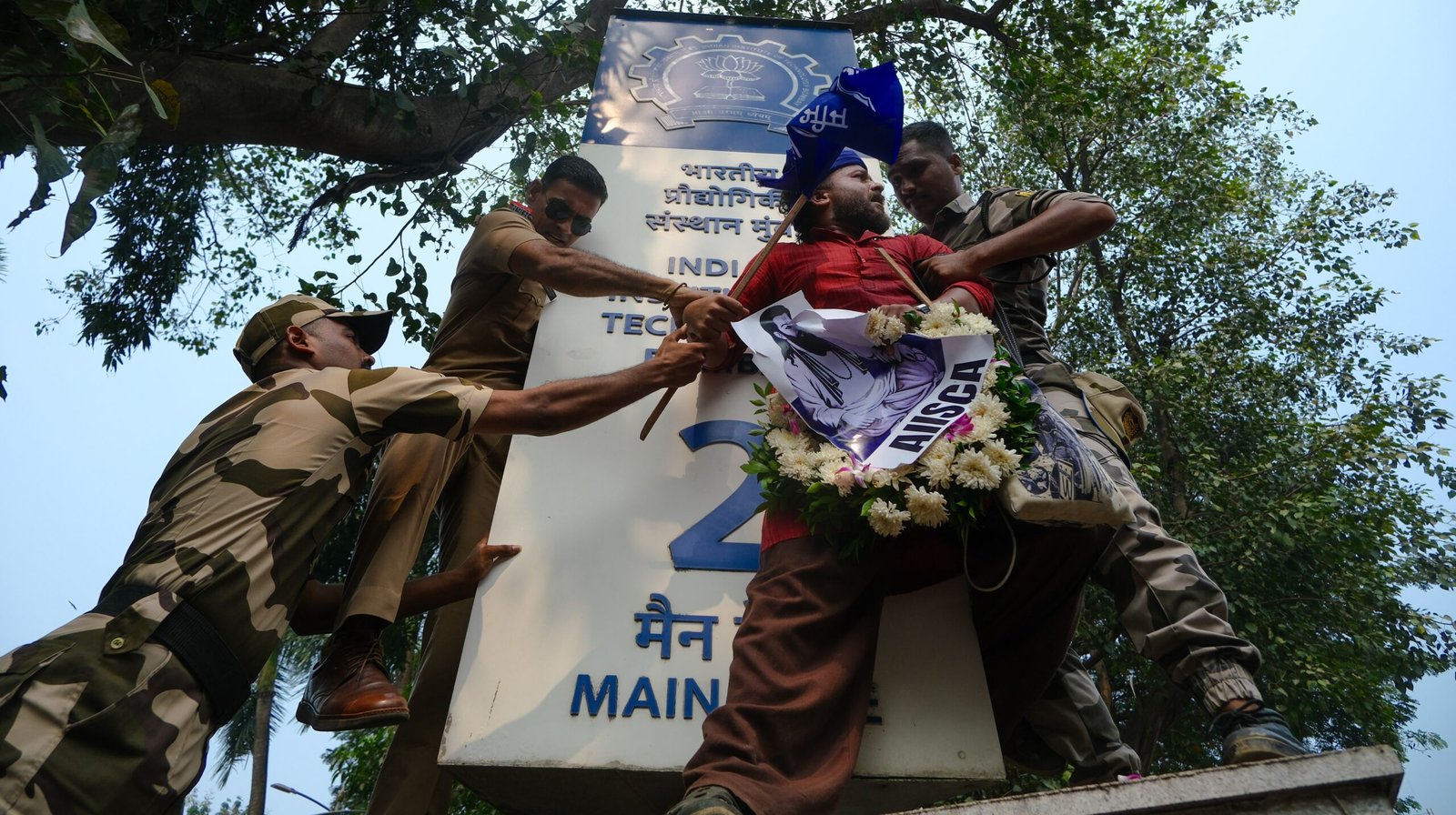
Protesters allege excessive force during detentions; journalist covering the demonstration says police tore a portrait of Babasaheb Ambedkar
The Mumbai Police on Sunday, October 18, 2026, launched a forceful crackdown on students and civil-rights activists outside the main gate and inside the premises of the Indian Institute of Technology (IIT) Bombay, detaining at least 22 students and dispersing a peaceful gathering marking the one-month death anniversary of Sahil Wakode. The demonstration, organised to demand criminal prosecution in connection with the 19-year-old Dalit student’s death, saw severe manhandling by personnel from the Powai police station, the destruction of the month-long sit-in site named ‘Justice Corner’, and the temporary detention of Wakode’s grieving parents, alongside an independent journalist covering the incident.
Crackdown on ‘Justice Corner’ and Campus Intrusions
The mobilisation followed a call issued by the All India Independent Scheduled Caste Association (AIISCA) inviting students, activists, and Wakode’s family to gather at 11 AM outside IIT Bombay’s main gate to offer shraddhanjali (homage) and reiterate their demand for justice. According to eyewitnesses and video footage accessed from the campus, police deployed in heavy numbers and cordoned off the entrance, barring entry to outside activists and students not enrolled at IIT Bombay.
The first wave of detentions began around 12:30 PM inside the campus when police entered in large numbers. Protesting students stated that when they questioned law enforcement about entering university premises without administrative intimation, officers moved to detain eight students immediately. Rachit Singh, a student at IIT Bombay who was among those detained, stated that police tore clothes, pulled students by their hair, kicked them, and dragged them out of the campus.
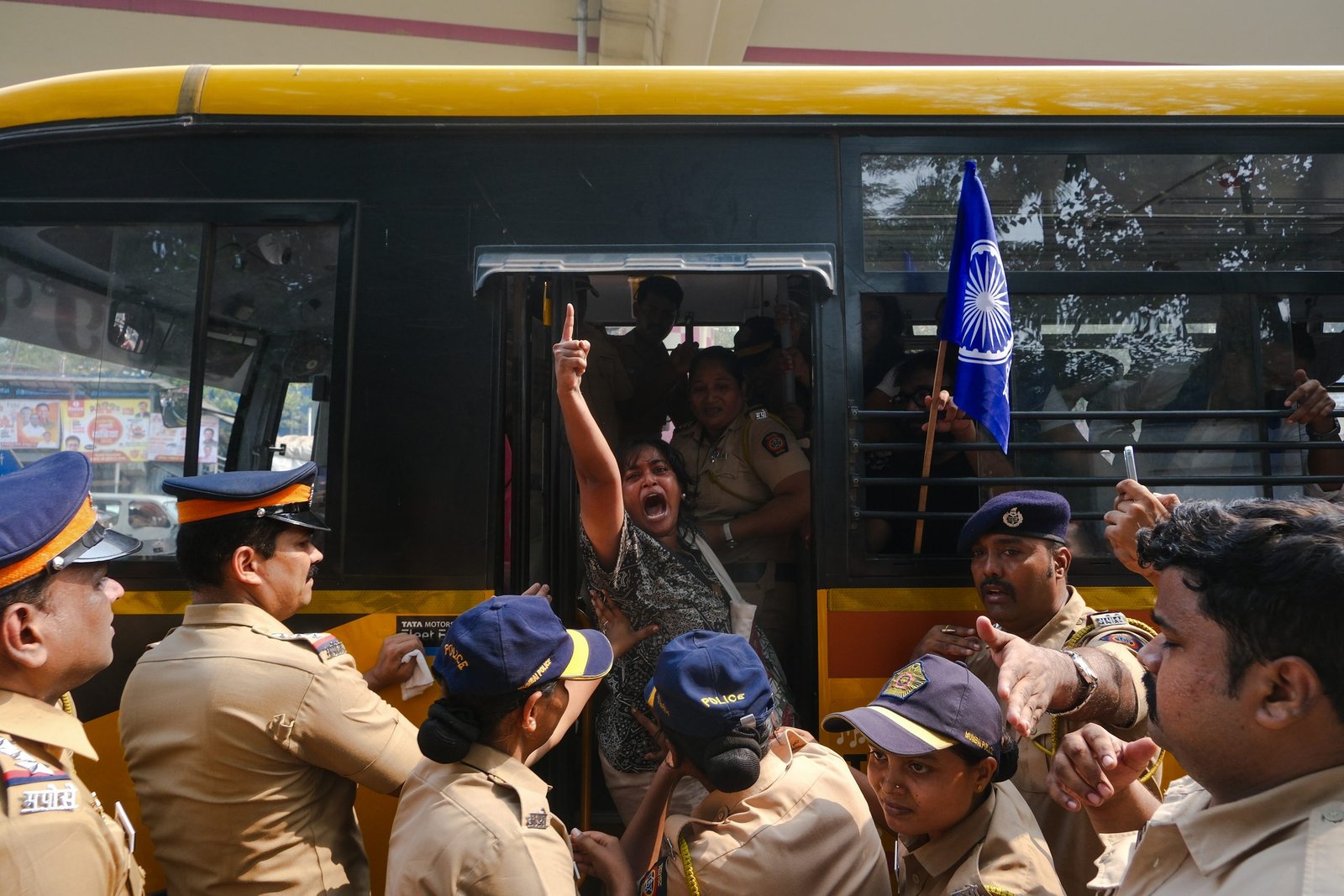
Simultaneously, the administration’s security apparatus and police dismantled the month-long ‘Justice Corner’ sit-in site near the main gate. Belongings, including students’ laptops, academic texts, and shoes, were confiscated during the raid, while banners displaying Dr B.R. Ambedkar were physically torn down, triggering outrage among demonstrators.
Physical Assault and Dispersal Across Stations
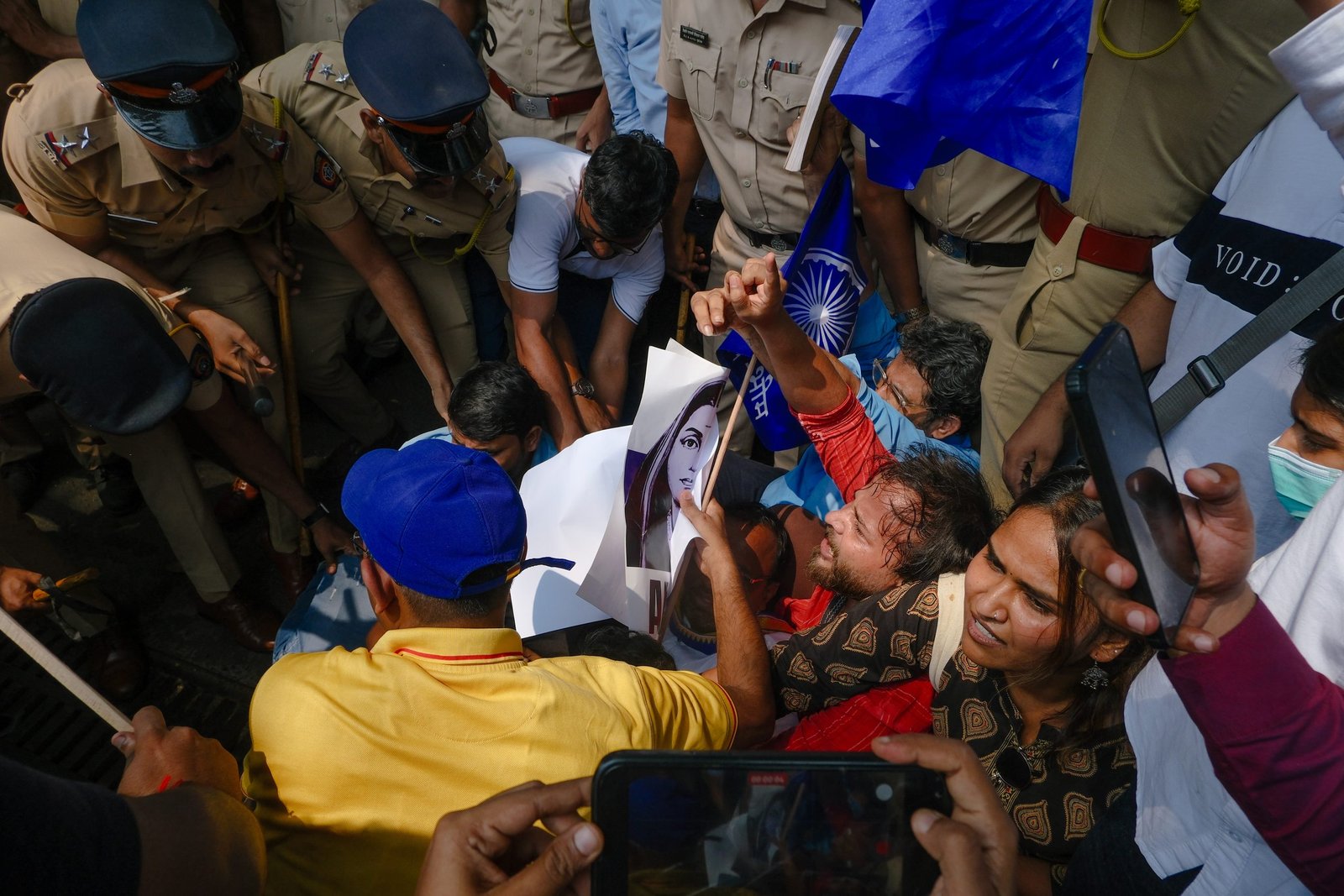
Following a brief release after their initial detention, students returned to the protest area to join Wakode’s parents, who have been on a continuous hunger strike for over two weeks demanding institutional accountability. The family had arrived to conduct a memorial service and formally requested an audience with the Chairman of the Board of Governors. When no official came forward to meet them, police initiated a broader round of detentions.
Footage accessed by Bahujan Lives Matter shows police officers physically manhandling male and female protesters, dragging them by the limbs, and subjecting them to physical blows. Several women protesters had their clothes disarranged during the scuffle. Detainees were subsequently split up and transported in police vans across multiple locations, including Powai, Rambaug Powai, and Sakinaka police stations, an act activists alleged was designed to fragment collective resistance.
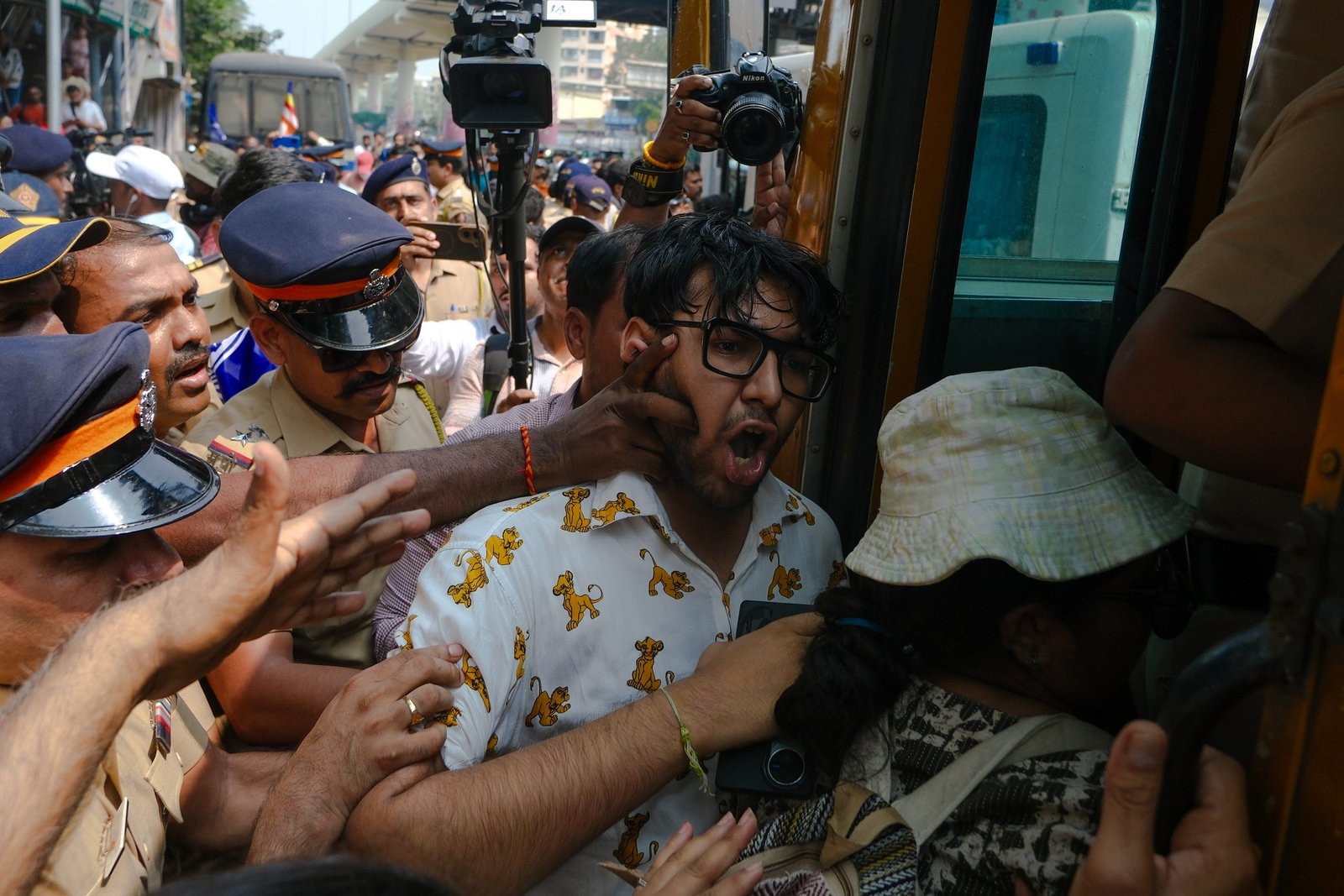
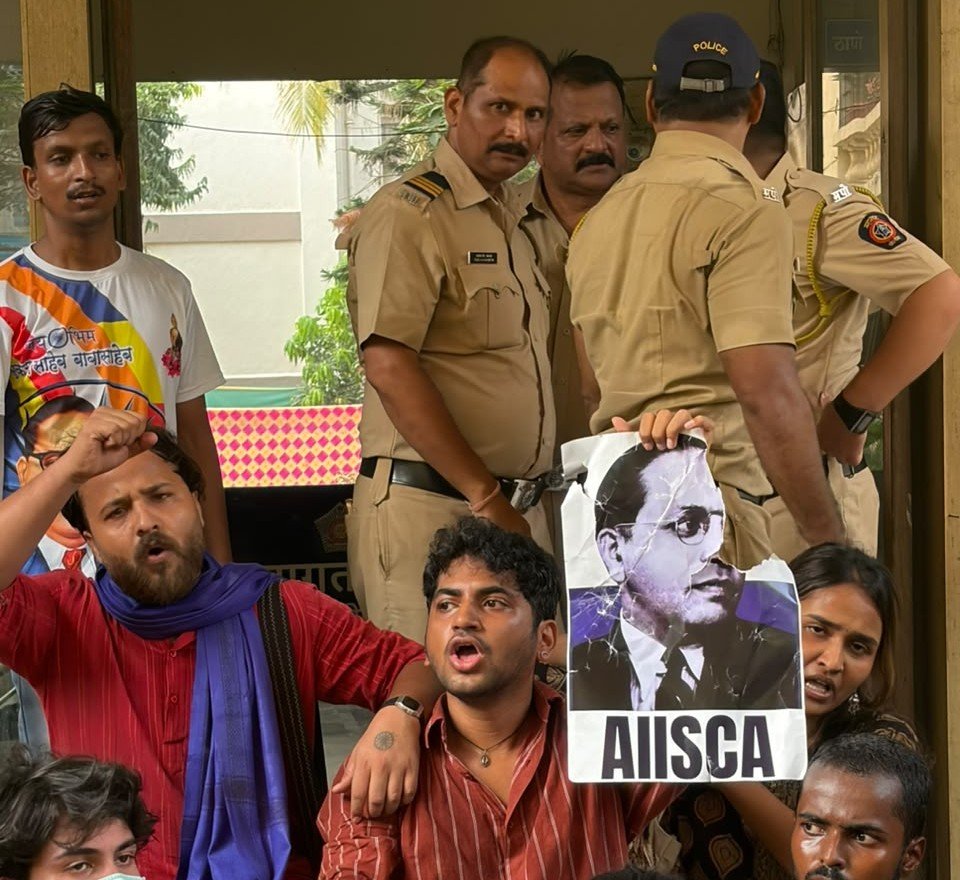
Shripad Sinnakaar, editor of The Ambedkarian Chronicle, who was on site to cover the event as an accredited journalist, was among those detained at Powai police station despite carrying press equipment.
“We gathered at the gate around noon after AIISCA’s call,” Sinnakaar said. “At the gate, they refused entry and began detaining people in batches. Even though I was there strictly to report, holding my mic and camera, they took me into custody. Inside the police station, they attempted to photograph women detainees, which our legal counsel objected to. Four of us were locked inside a small room in an effort to intimidate us. The tipping point occurred when police ripped apart a portrait of Babasaheb Ambedkar. We made it clear that there could be no dialogue with an administration and police force that desecrates Ambedkar’s image.”
The Death of Sahil Wakode and Administrative Impunity
The escalating campus unrest stems from the death of 19-year-old Sahil Wakode on September 18, 2026. A student from the Dalit community, Wakode died by suicide following alleged casteist harassment and systemic humiliation at the hands of faculty member Prof. Suryanarayan Doolla. While Wakode’s parents and student groups have demanded the registration of an FIR and immediate arrest under the Scheduled Castes and the Scheduled Tribes (Prevention of Atrocities) Act, no arrests have been executed a month into the investigation.
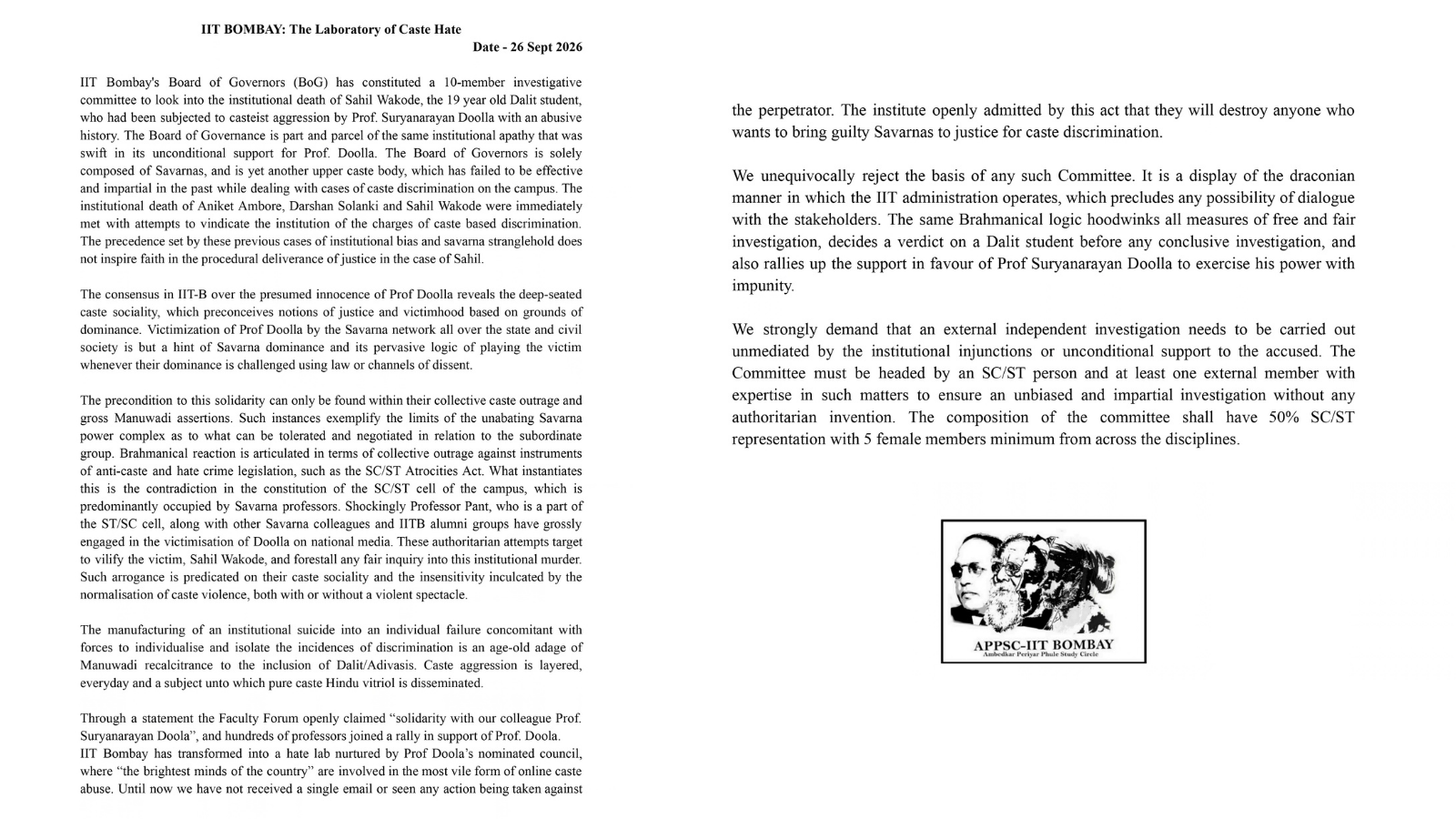
Earlier, the Ambedkar Periyar Phule Study Circle (APPSC) of IIT Bombay had publicly rejected a 10-member investigative committee constituted by the institute’s Board of Governors (BoG) on September 26, noting that the governing body is overwhelmingly upper-caste and possesses a documented track record of whitewashing caste violence on campus. The student collective had pointed to past institutional apathy following the deaths of Aniket Ambore and Darshan Solanki, criticising the Faculty Forum for organising solidarity rallies in defence of Prof. Doolla while systematically isolating and vilifying Dalit scholars seeking judicial remedy.
At a prior solidarity assembly at Mumbai’s Azad Maidan, AIISCA National President Rahul Sonpimple addressed the administration’s institutional protection of the accused faculty member:
“When your courts, your judiciary, your police, and your institutions refuse to give us justice, we will be forced to secure it through our own democratic and constitutional paths. If Professor Doolla is not jailed under the SC/ST Act, we will not stop. Sahil’s father sat here with five people initially; today there are fifty, tomorrow there will be five hundred. The murder happened inside IIT Bombay, the accusations are against an IIT professor, and the struggle will happen at the gates and within the corridors of IIT Bombay.”
Demands for Director’s Resignation
In the wake of Sunday’s crackdown, the student body demanding justice for Sahil issued an official statement condemning the direct collusion between IIT Director Shireesh Kedare, the Chief Security Officer, and the Mumbai Police.
The statement pointed out that Director Kedare had previously put his signature to an 18-point charter of demands submitted by students, in which Point 4 explicitly mandated that the Director, the Dean of Academic Programmes (AP), and the Dean of Student Affairs (SA) would step down if points 5 through 14 were not implemented within a month. With the deadline passed, the students declared the director unfit to occupy his post, pointing out that four marginalized students have died across the campus within a single year due to systemic neglect.
Students across departments, along with representatives from various civil society organizations, have announced a continued mass protest at the Ground Floor of the IIT Bombay Main Building on October 21 to oppose police brutality inside university spaces, challenge the institutional dilution of anti-atrocity laws, and demand the immediate resignation of the institute’s leadership.